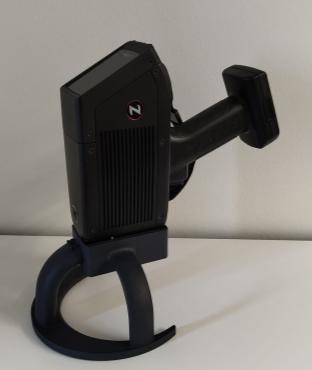
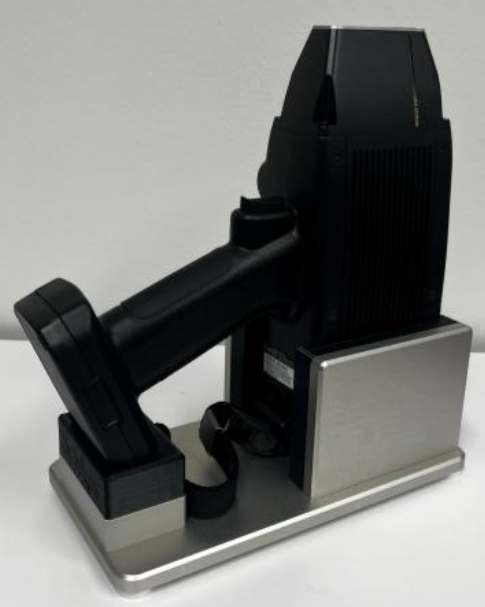
Automated core logging
XRF, LIBS and Vis-NIR combine elemental chemistry, light elements and mineralogy in one modular workflow.
- Automated scanning directly in core boxes
- API integration and combined evaluation of multiple sensors
- Deployable in the field, core shed or on a mobile skid
XRFLIBSreveNIRAutomation
Up to approximately 130 m of core per eight-hour shift in the described GERDA workflow.
SciAps Cloud+
Measurements, reports, instrument configurations and calibration models are managed centrally across locations.
- Automatic synchronisation and secure backup
- PDF and CSV reports from connected analysers
- Fleet management, live monitoring and remote updates
XRFLIBSCloud+
Measurement data is immediately available to teams for evaluation and traceability.
Lithium exploration in the field
Handheld LIBS enables direct lithium measurement in pegmatites and claystones plus analysis of important associated elements.
- Z901 for dedicated lithium analysis
- Z903 with extended spectral range for Li, K, Rb and other elements
- Factory or site-specific calibrations
Z901Z903
Detection limits below 5 ppm Li in many solid samples; typical test time below five seconds.
Soil carbon and texture
A study of 305 European soil samples assessed handheld LIBS for predicting organic carbon, sand, silt and clay.
- Rapid measurement directly on sample material
- Evaluation of characteristic C, Si, Ca and K lines
- Potential for large-scale, spatially resolved soil surveys
Z903LIBS
In the study, sand showed the lowest prediction error, followed by clay, silt and organic carbon.
Surface and coating analysis
Variable 2D grids and individually evaluated laser pulses make small areas, deposits and coatings accessible.
- Qualitative elemental identification at individual surface points
- Separation of a thin deposit from the substrate
- Quantitative coating thickness measurement with suitable standards
Z903LIBS
Measurement grids up to 3 × 3 mm and heat maps of elemental distribution.
55 kV XRF for critical elements
The X555's 55 kV excitation improves detection limits for critical metals, rare earths and pathfinder elements compared with 50 kV systems.
- Improved sensitivity for Ag, Cd, Sn, Sb, Te and Ba
- REE analysis including La, Ce, Pr, Nd and Sm
- Can be complemented by Z901/Z903 for Li, Be and B
X555
Ag example: documented detection limit of 1–2 ppm with X555 versus 6–9 ppm with X505.
NDT and positive material identification
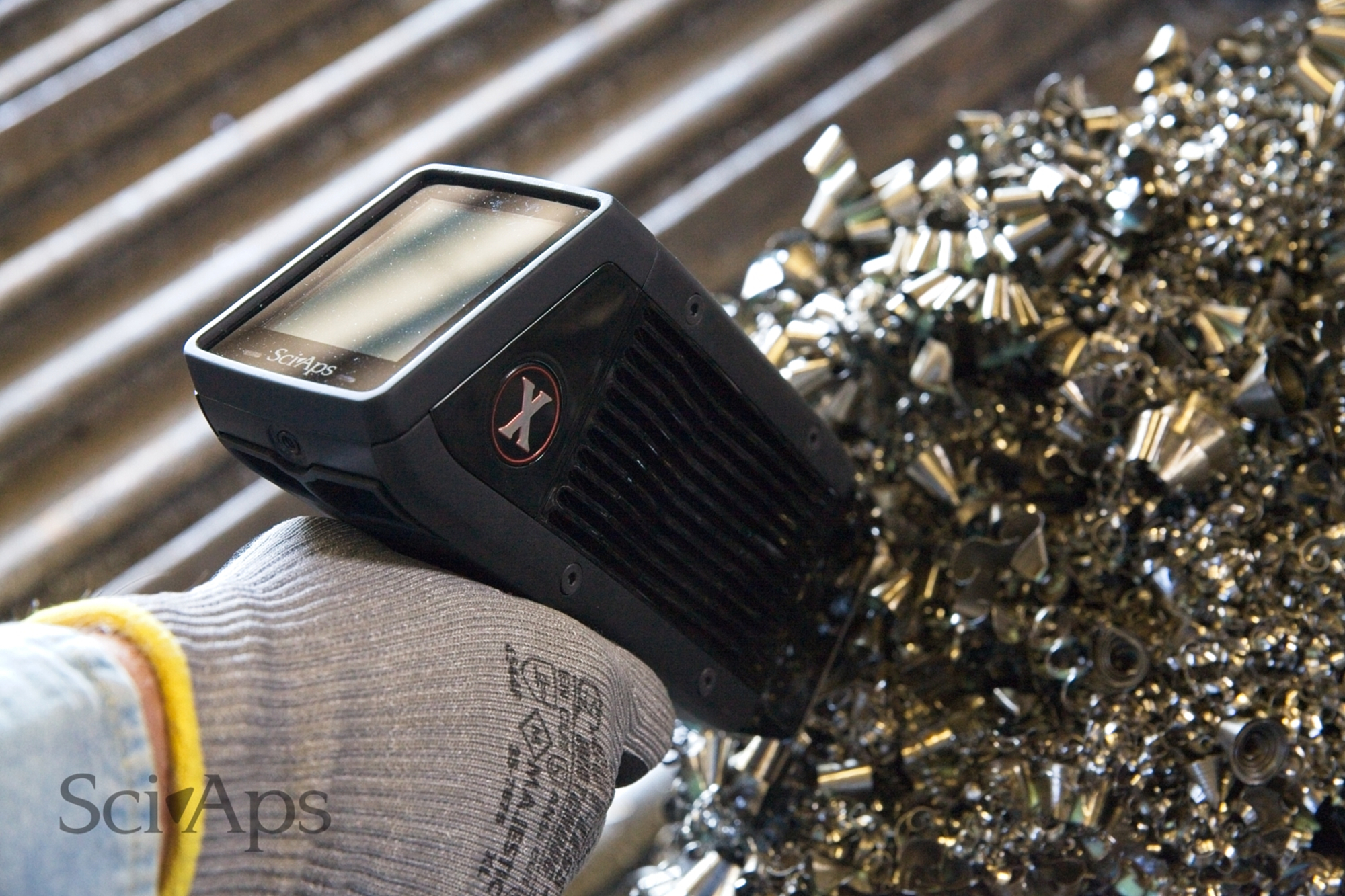
XRF and LIBS complement each other in mobile material verification of steels, stainless, nickel and aluminium alloys.
- LIBS for carbon, carbon equivalent and L/H grades
- XRF for P, S and conventional alloying elements
- Combined documentation of XRF and LIBS results
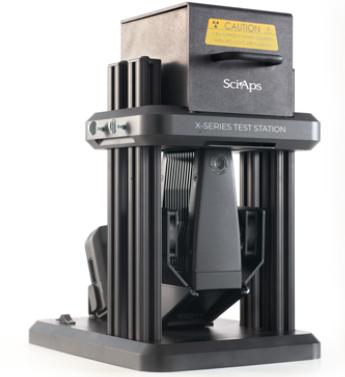
X550Z902C+OneBox
The right technology for each target element, without unnecessary compromise in PMI.
Carbon in small components
Handheld LIBS tests welding wire, fasteners, thin sheet and small-diameter pipe directly on site.
- Small aperture without special part adapters
- Focused measurement area of approximately 50 µm
- Separation of carbon-dependent grades such as 316L and 316H
Z902C+LIBS
Immediate on-site testing instead of collecting chips, shipping to a laboratory and waiting.
Lithium battery recycling
Z903 and XRF support recycling and manufacturing from black mass to quality control of lithium compounds.
- Li, Co, Ni, Mn, P, Fe and, if required, C in black mass
- Pass/fail testing of lithium carbonate and lithium hydroxide
- Rapid control without large laboratory equipment
Z903XRFOneBox
Documented assessment: pass above 17% Li, further testing at 15–17% Li, fail below 15% Li.
The information is a concise summary of the supplied documents. Measurement performance and suitability depend on sample, surface, matrix, calibration and measurement conditions.