XRF = X-ray fluorescence
Handheld XRF – fast material analysis on site
Non-destructive, in seconds, right on the part: handheld XRF determines the elemental composition of metals, minerals and many other materials.
Principle
XRF explained simply
01
X-rays
02
Excitation of atoms
03
Characteristic fluorescence
04
Element identification
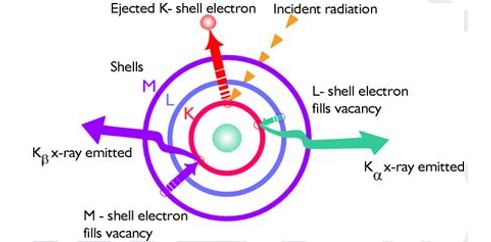
1. X-ray fluorescence is generated
Incident X-rays eject an electron from an inner shell. An electron from a higher shell fills the vacancy, releasing characteristic X-ray radiation.
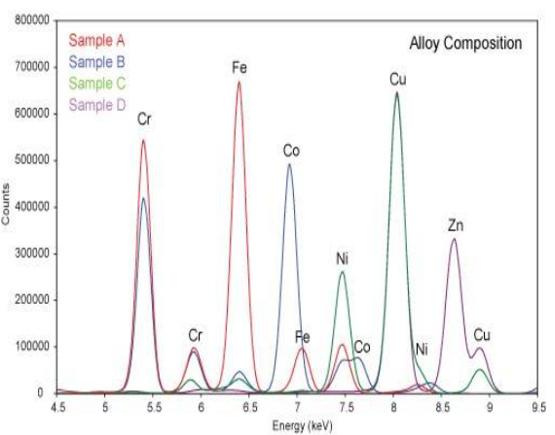
2. Elements are identified
The detector measures the energy and intensity of the radiation. Peak positions identify the elements, while their heights enable concentration analysis.
Measurement examples straight from the instrument
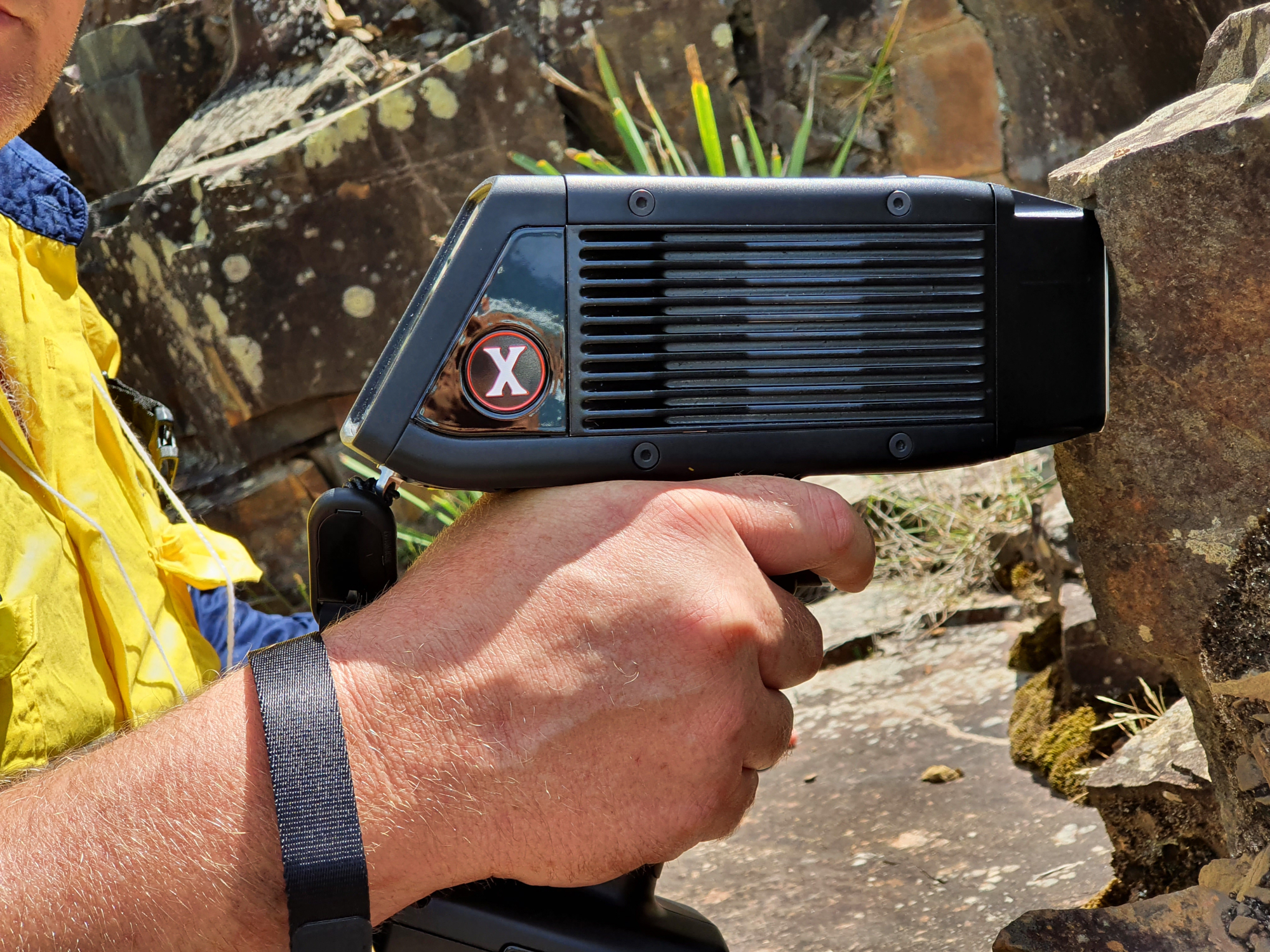
Elements on site in rock
The X-550 measures the outcrop directly on the rock face – no sampling, no sample preparation, in seconds.
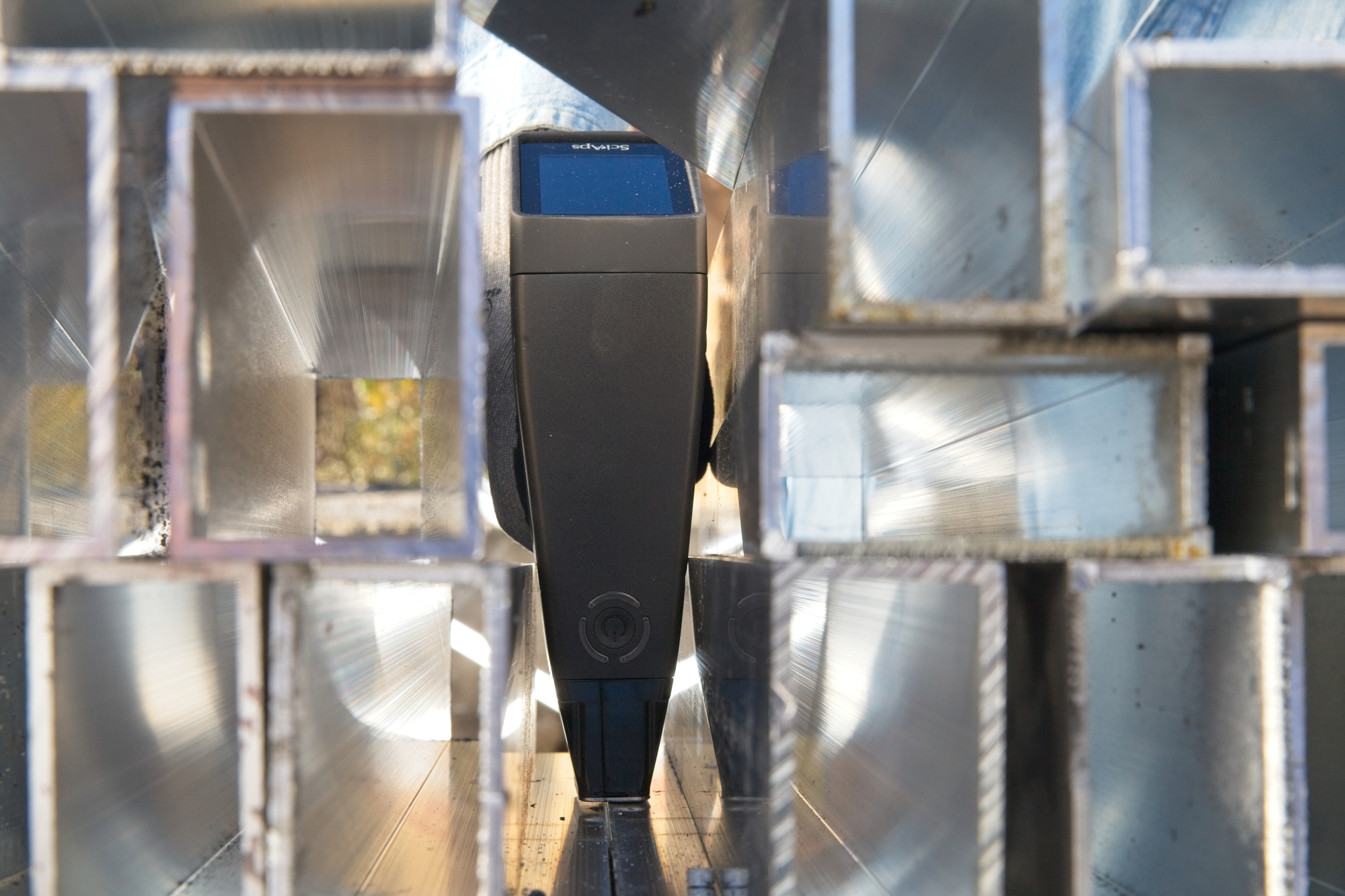
Verifying alloys in the warehouse
PMI right on the part: the analyzer confirms the grade or alloy before the material is processed or shipped.
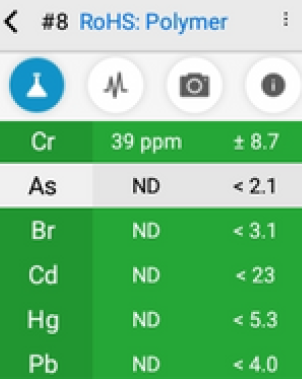
RoHS screening on polymers
On a polymer screening the analyzer reports all restricted heavy metals (Cr, As, Br, Cd, Hg, Pb) as ND (not detected), below the limit values.
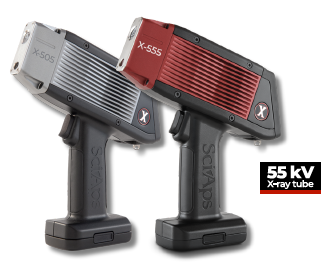
Powerful excitation via 55 kV
Tube voltage determines which elements are excited efficiently: the X-555 with its 55 kV tube reliably reaches critical elements such as silver and rare earths.
Context
Strengths and limits of XRF
What does XRF measure?
Where does XRF excel?
What are the limits?
Important
XRF cannot measure carbon directly.
For carbon in steel, CEV or L/H grades, handheld LIBS is the right technology. Go to LIBS →
SciAps
SciAps XRF instruments with official product photos
XRF
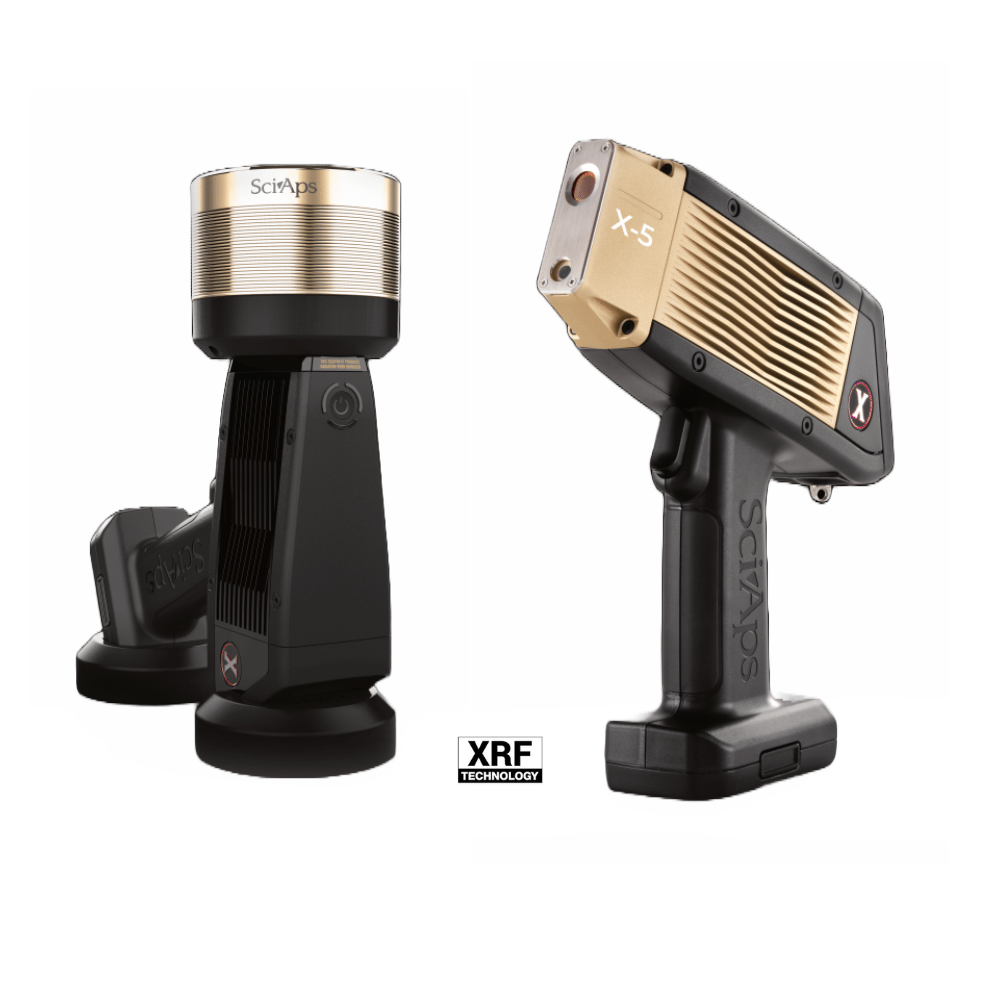
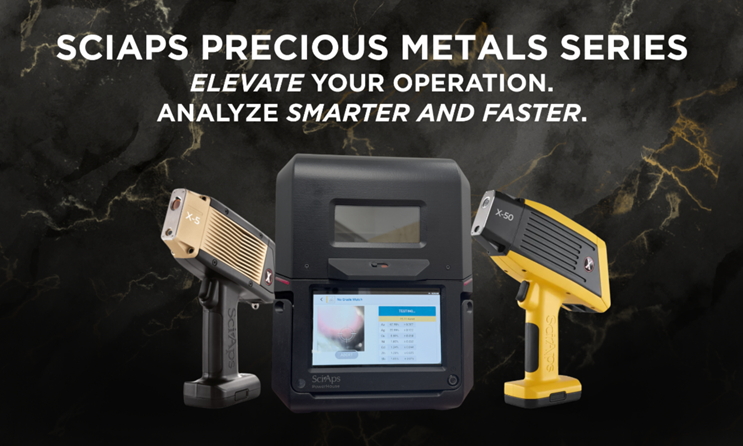
SciAps X-5
Handheld XRF focused on precious metals: karat value in under 1 second, Au, Ag, Pt and Pd in real time – only approx. 1.35 kg.
XRF
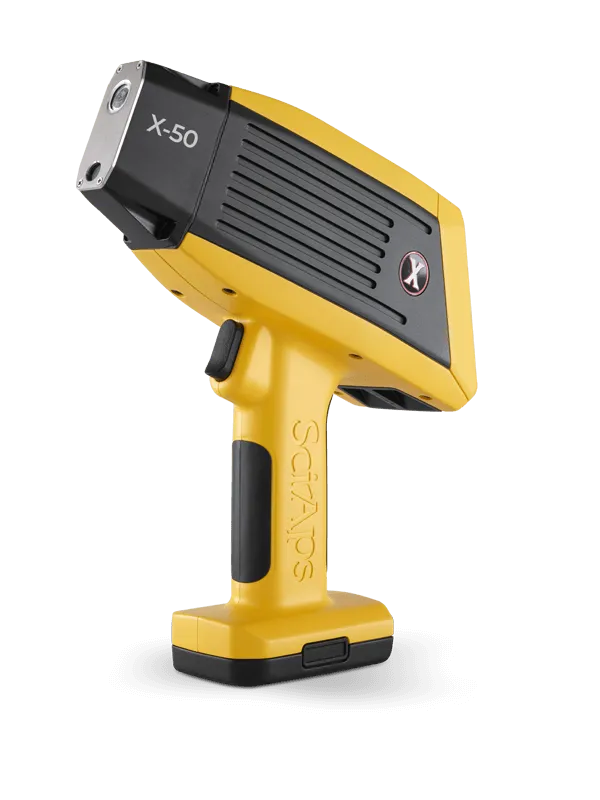
SciAps X-50
Handheld XRF for metals, mining and environmental work.
XRF
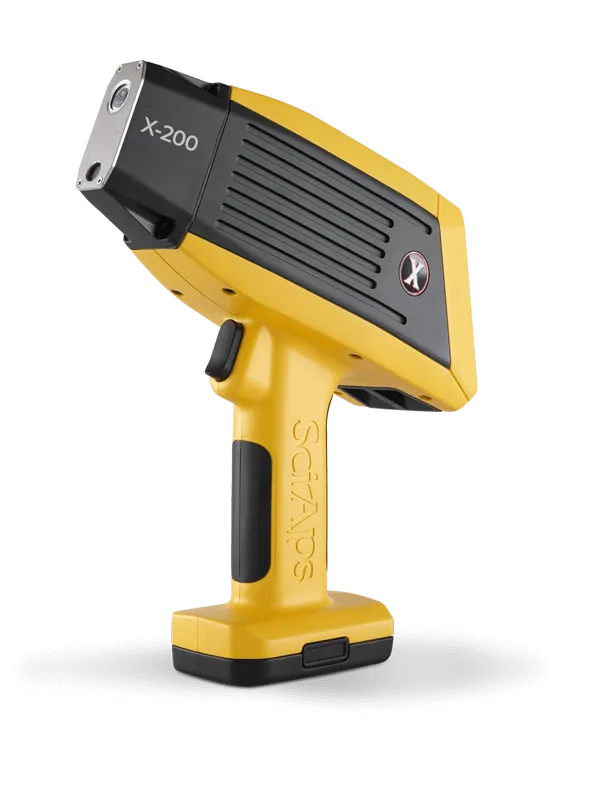
SciAps X200
Versatile handheld XRF for general material analysis.
XRF
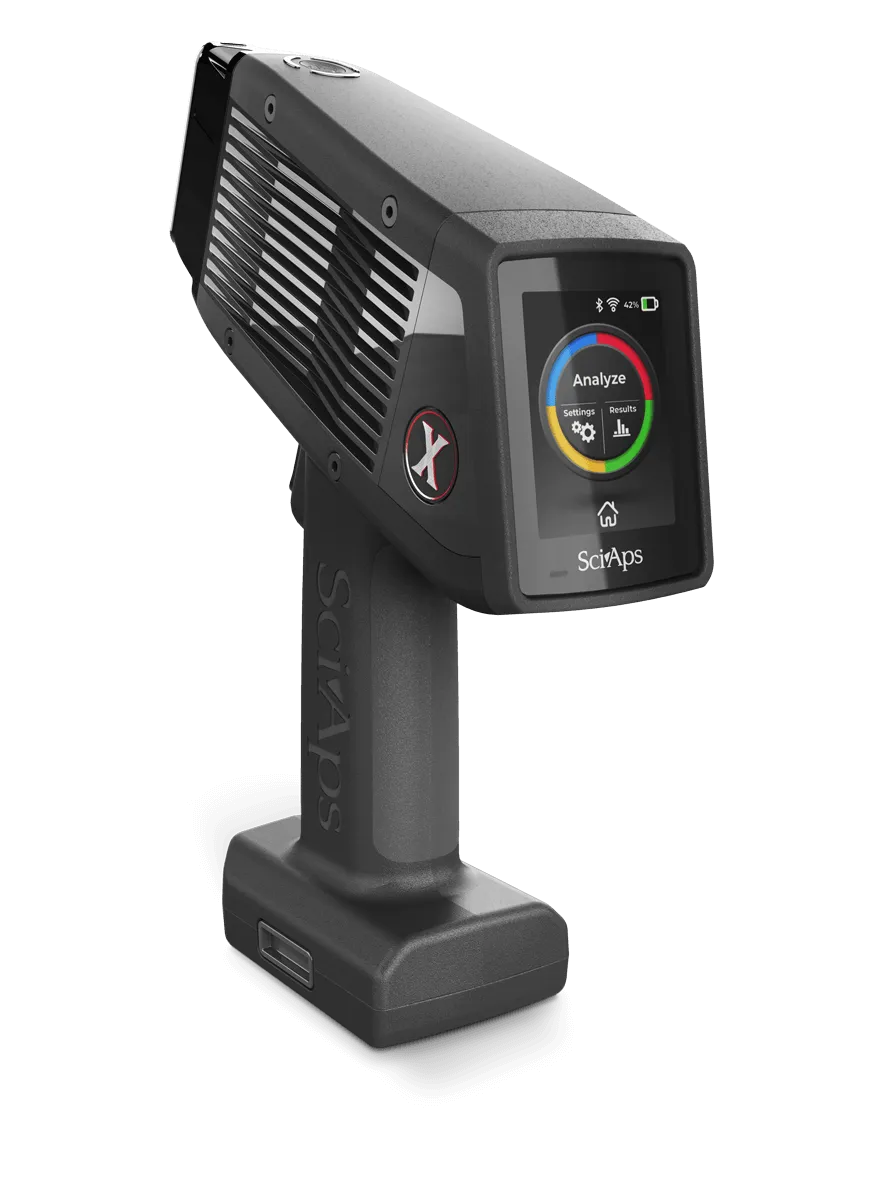
SciAps X550
Light, fast handheld XRF for high sample throughput.
XRF
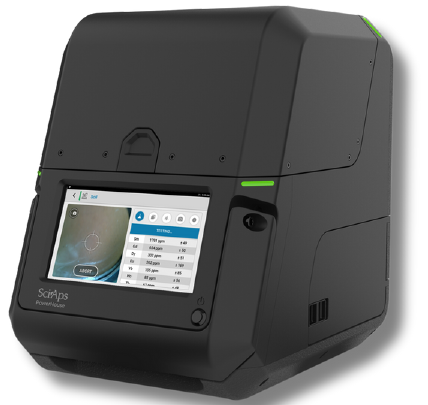
SciAps PowerHouse GEO REE
High-performance XRF system for demanding tasks.
XRF
SciAps PowerHouse PM
First portable, battery-powered benchtop analyser for precious metals: karat value in about 1 second, Plating Alert detects coatings, approx. 8.8 kg.
XRF
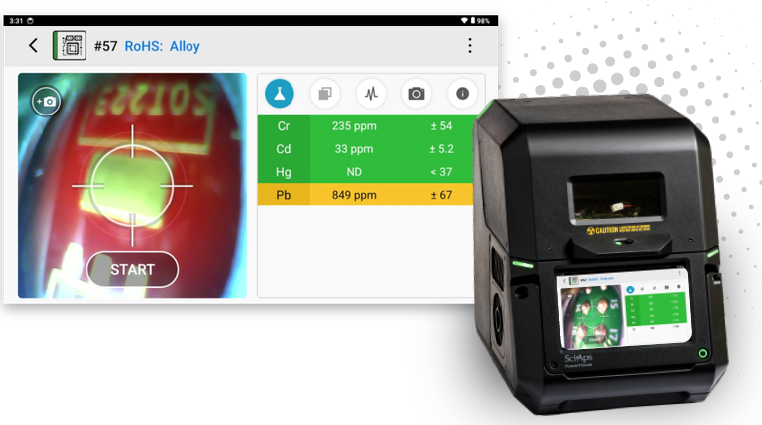
SciAps PowerHouse Alloy, RoHS, CarCat, GEO
Portable benchtop XRF for RoHS and restricted-substance testing: Pb, Cd, Hg, Cr, Br and Cl in polymers, alloys and coatings – fully shielded chamber.
Automation
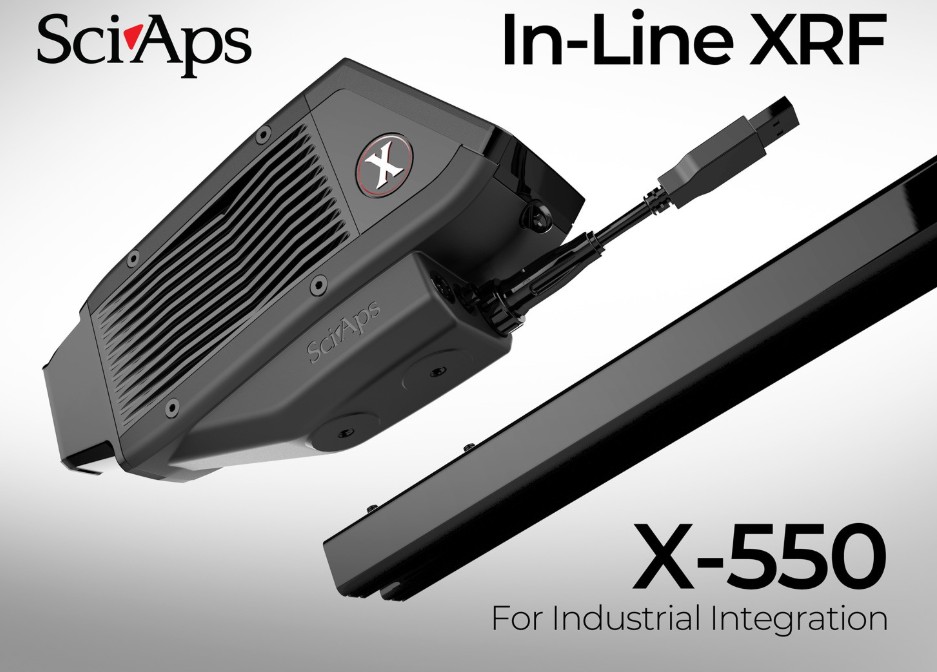
SciAps
XRF and LIBS automation for industrial integration: analysers in a special housing for in-line use on conveyors or production lines, data transfer via the SciAps Remote Control API – control measurements remotely and retrieve results and spectra automatically.
Topics
Typical XRF applications
- Alloy identification
- PMI / Positive Material Identification
- Metal recycling
- Precious metals
- RoHS / compliance
- Geology / mining
- Coatings
- Plastics
- Archaeology / museums
- Quality control
Safe operation: Radiation safety & module R2.2
Which instrument fits your application?
Describe your material and task – I'll give you a technical assessment.