LIBS = Laser-Induced Breakdown Spectroscopy
Handheld LIBS – when light elements matter
A focused laser pulse creates a micro-plasma on the surface. The emitted light reveals which elements are present – including carbon and light elements.
Principle
LIBS explained simply
01
Laser
02
Plasma
03
Light emission
04
Spectral analysis
05
Element identification
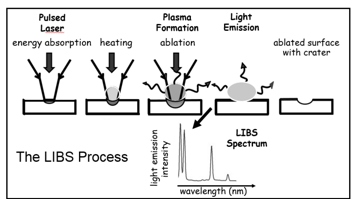
1. The laser pulse creates a plasma
A focused laser pulse hits the sample surface: the material absorbs the energy, heats up locally and is ablated. A hot micro-plasma forms at the surface and emits light – leaving behind a tiny crater.
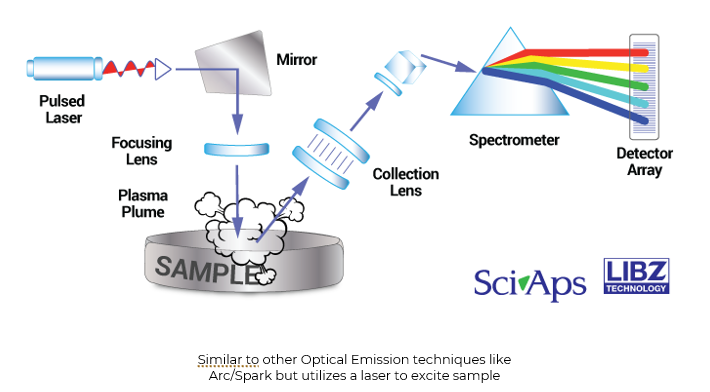
2. The light reveals the elements
A collection lens guides the plasma light into the spectrometer, which splits it into wavelengths. Every element emits characteristic lines – the instrument derives elements and concentrations from them, including carbon and light elements.
Measurement examples straight from the instrument
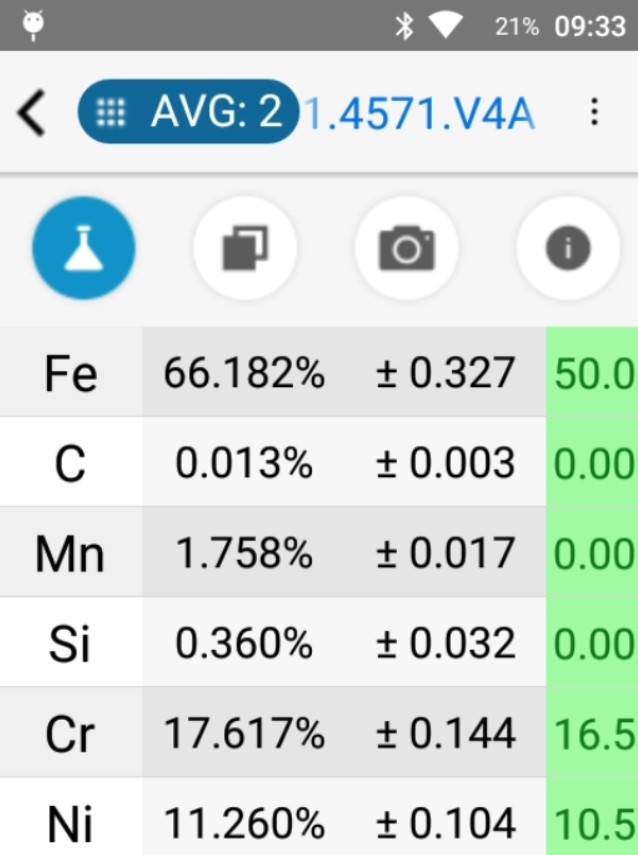
Carbon in stainless steel
Measurement of 1.4571: the instrument reads C at 0.013% ± 0.003 right alongside Cr and Ni – carbon is determined together with the alloying elements.
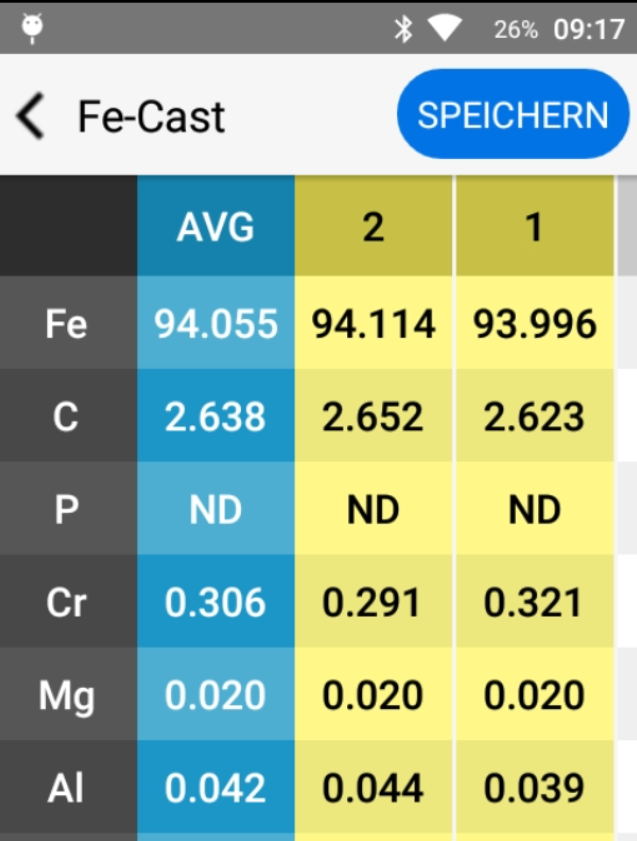
Average of multiple measurements
On cast iron (Fe-Cast) the instrument combines individual readings into an average (AVG) – here C averages 2.638%.
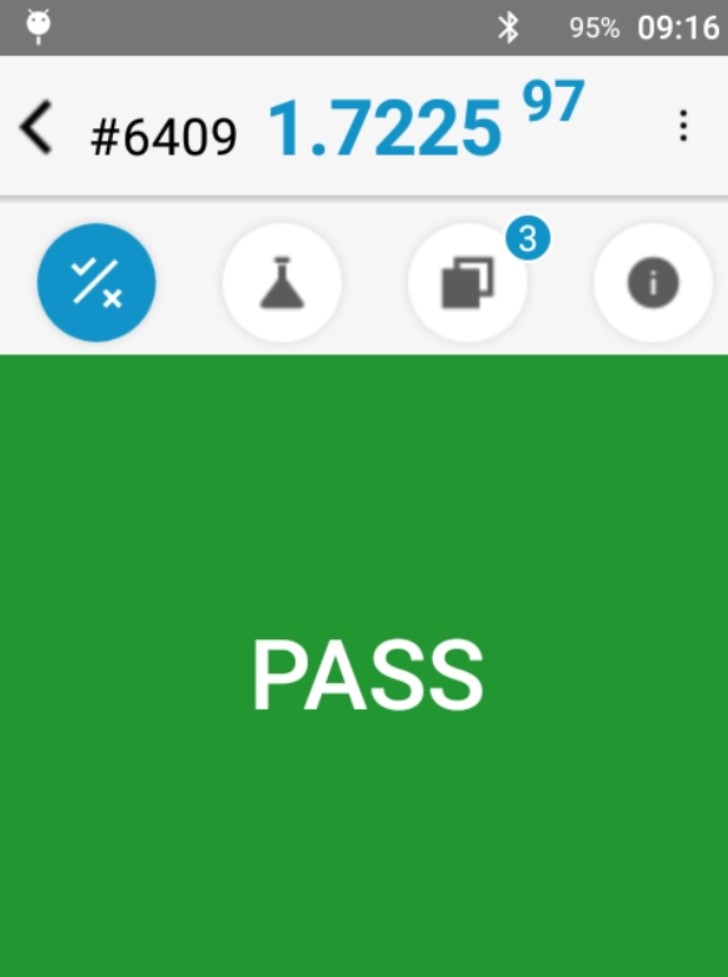
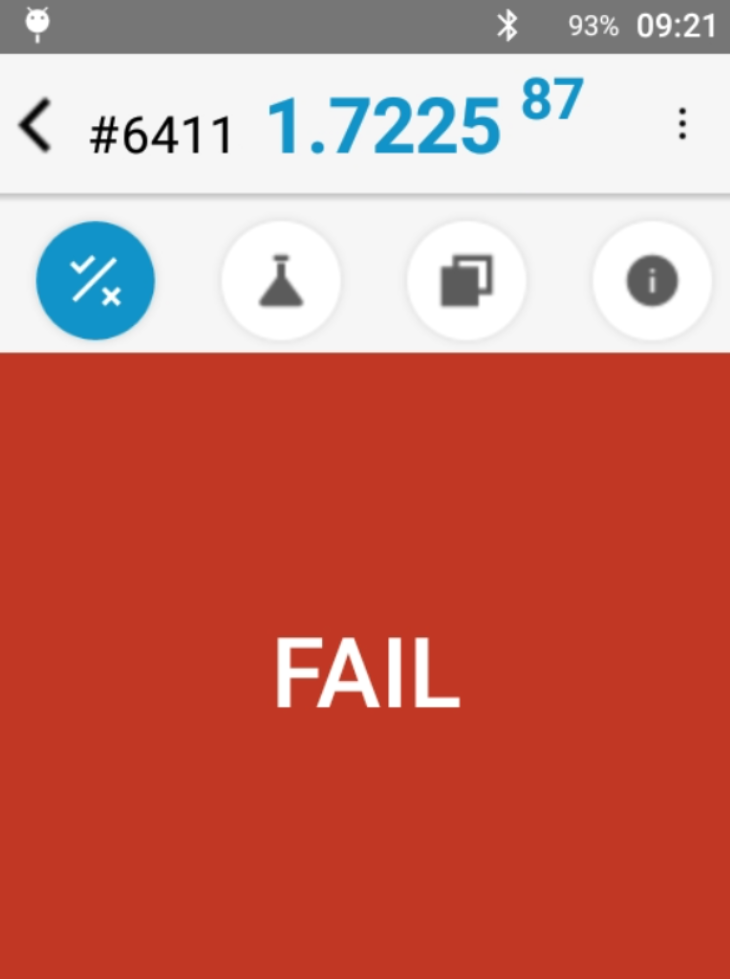
Sorting with PASS/FAIL
Grade 1.7225 identified: on match the instrument shows PASS on green, on mismatch FAIL on red – the verdict is readable at a glance.
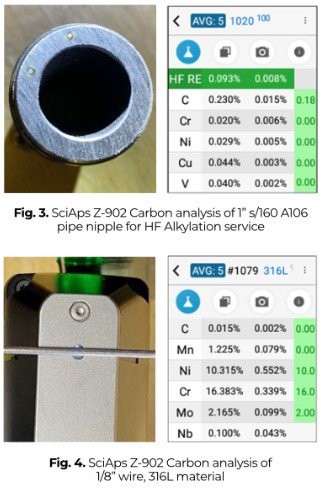
Z-902 Carbon in practice
Carbon measurements on an A106 pipe nipple (HF alkylation service, C 0.230%) and a 1/8″ 316L wire (C 0.015%) – even on small parts.
Applications
What handheld LIBS is used for
- Carbon in steel
- CEV / carbon equivalent
- Aluminium
- Lithium
- Beryllium
- Boron
- Light elements
- Sorting
- Metal identification
- Battery materials
- Automotive
- Recycling
Strengths
Limits
Safety
SciAps
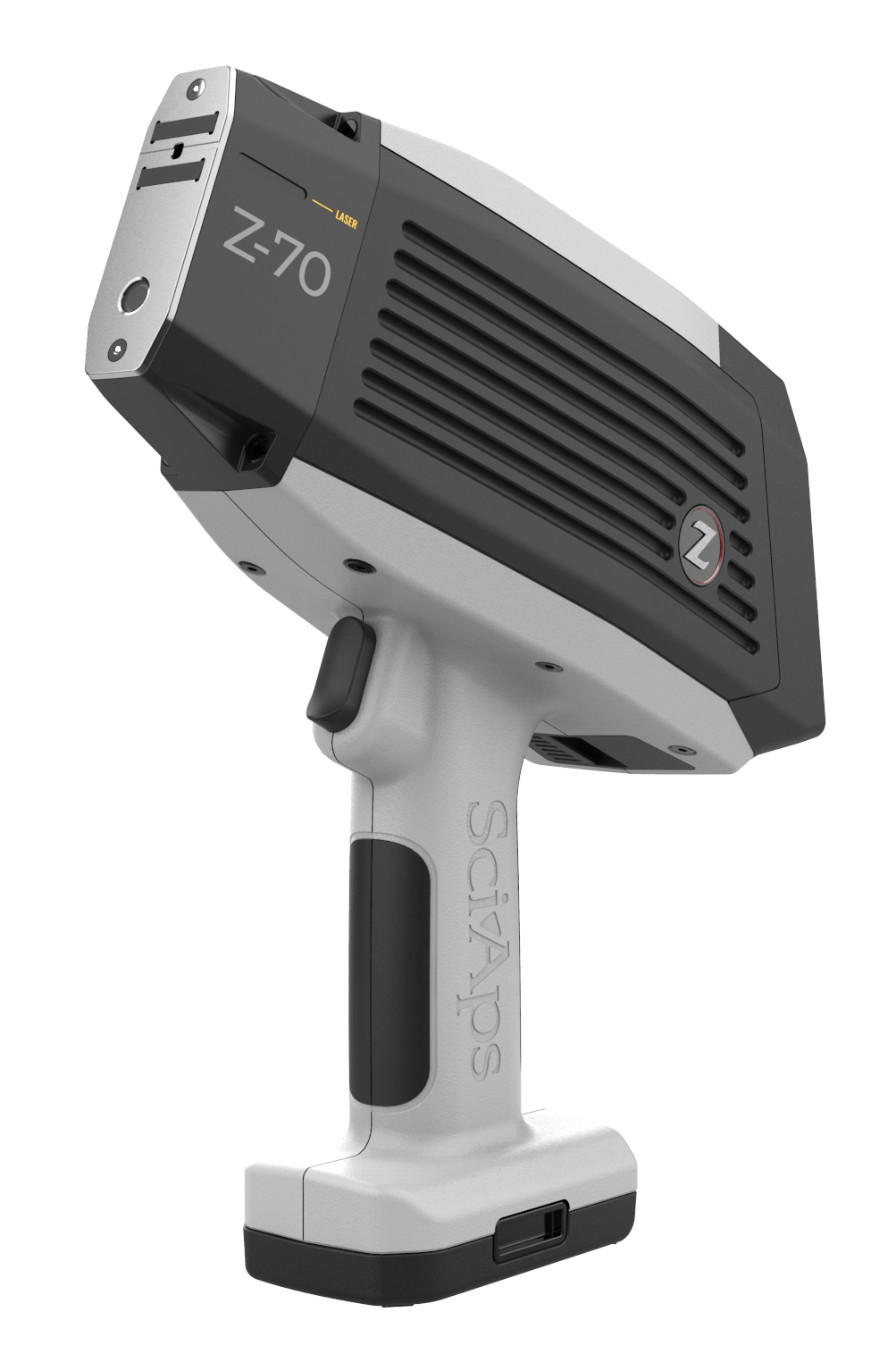
SciAps LIBS instruments with official product photos
LIBS
SciAps Z70
Handheld LIBS for alloy ID including light elements.
LIBS
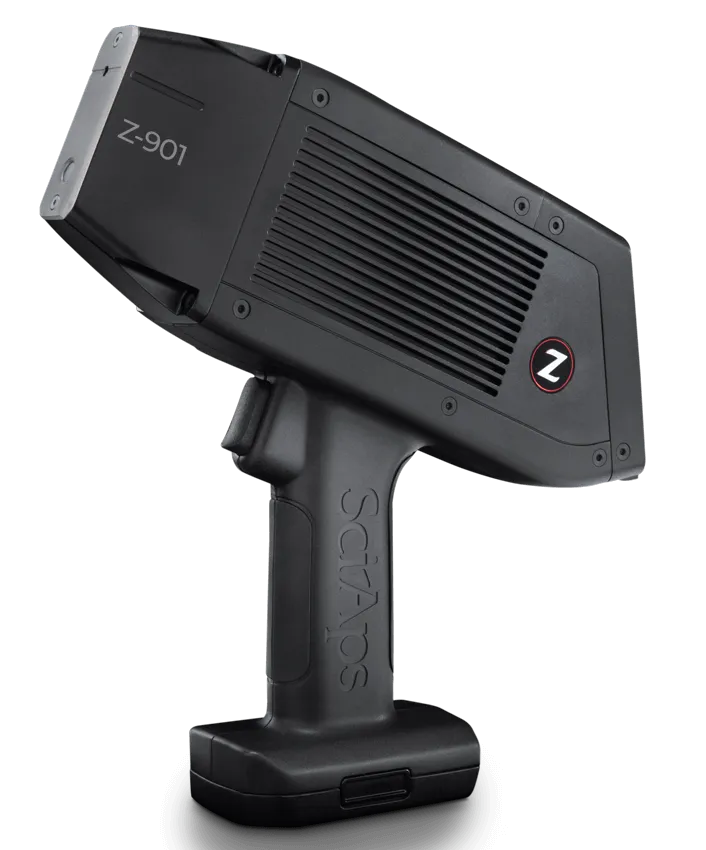
SciAps Z901
Handheld LIBS for metal identification and sorting.
LIBS
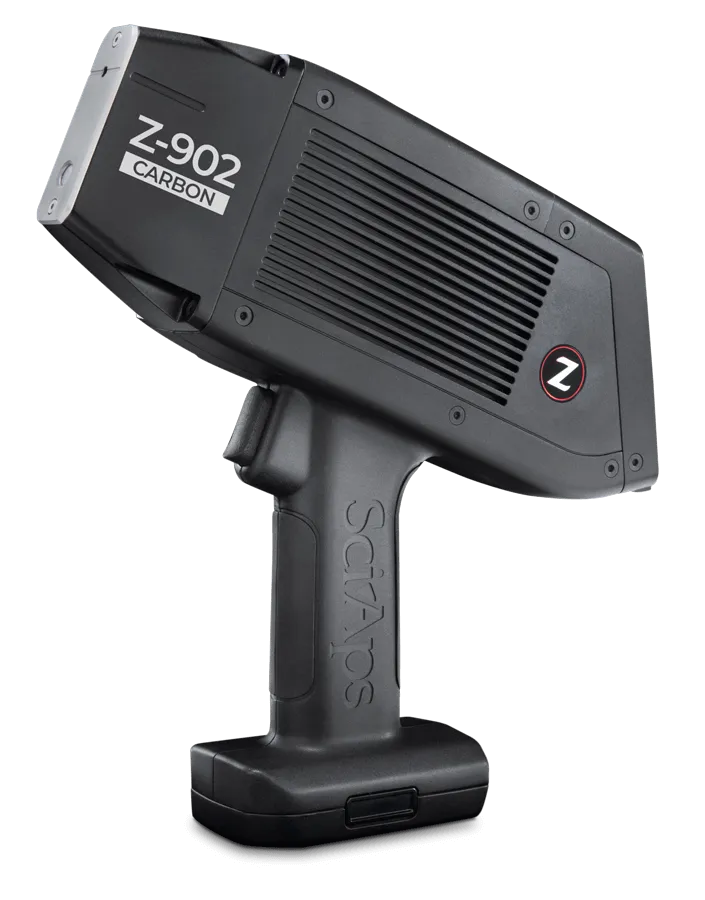
SciAps Z902C+
Handheld LIBS focused on carbon in steel.
LIBS
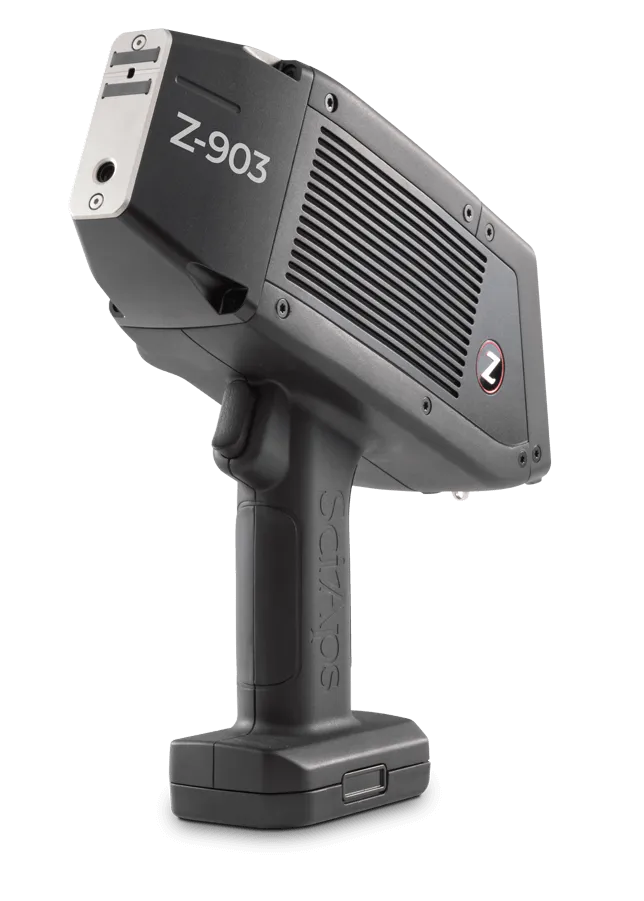
SciAps Z903
Handheld LIBS for light elements such as Li, Be and B.
XRF + LIBS
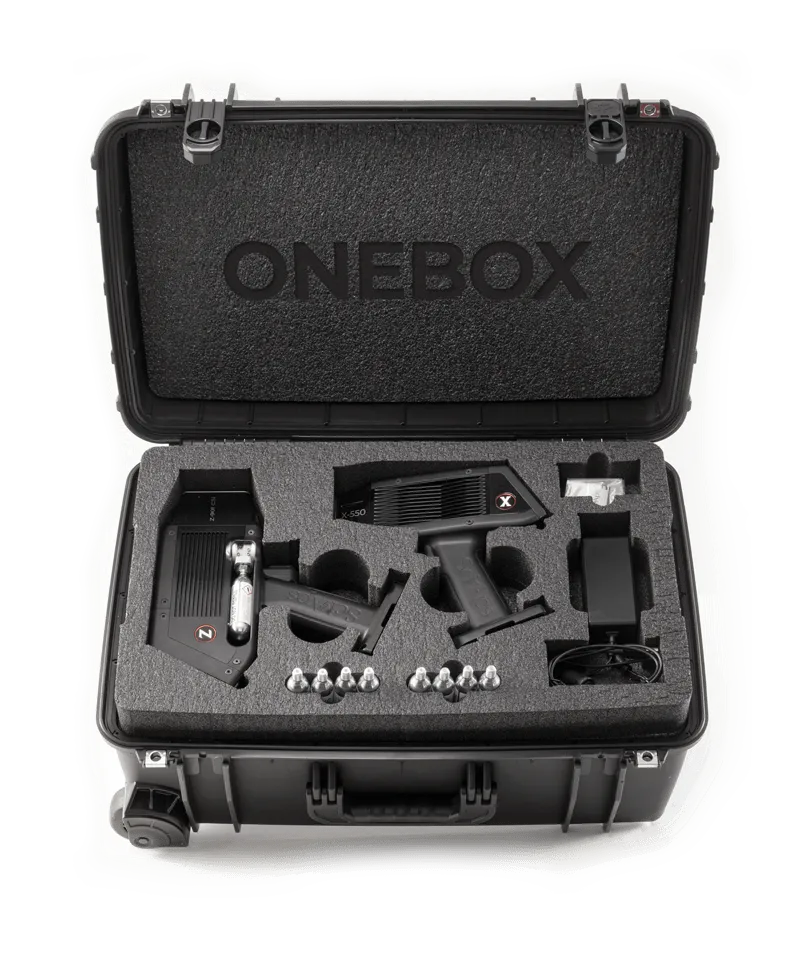
SciAps OneBox
Combined XRF and LIBS concept for the widest application range.
Automation
SciAps
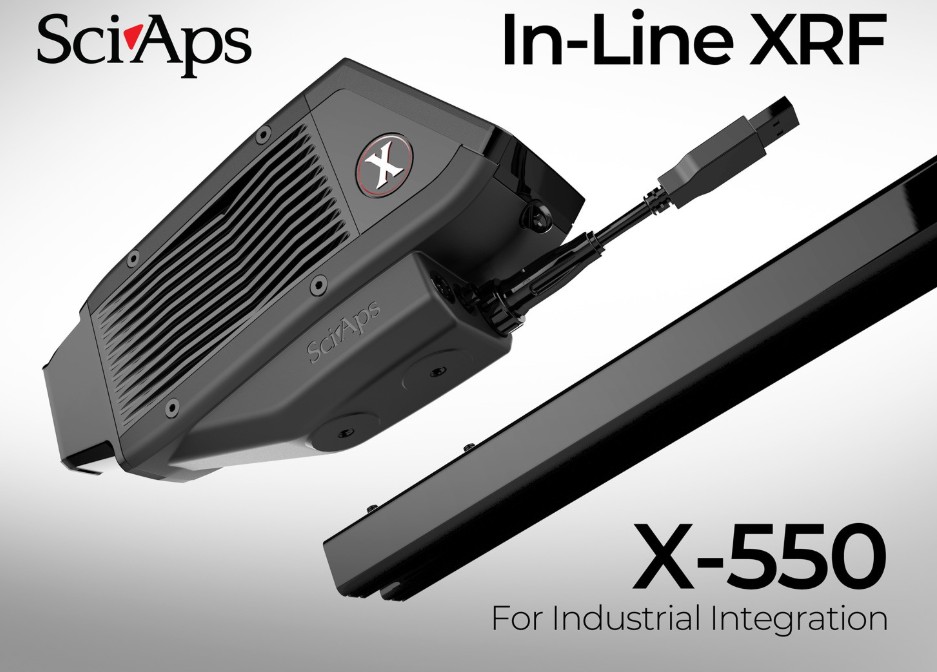
XRF and LIBS automation for industrial integration: analysers in a special housing for in-line use on conveyors or production lines, data transfer via the SciAps Remote Control API – control measurements remotely and retrieve results and spectra automatically.
XRF + LIBS
Why LIBS and XRF complement each other
OneBox concept
XRF + LIBS = broader analytical application range
XRF reliably covers mid and heavy elements and precious metals; LIBS adds carbon and light elements. Together, far more tasks can be solved with portable instruments.
Which instrument fits your application?
Describe your material and task – I'll give you a technical assessment.